
What's Actually Causing Your Black Beard Algae? (Hint: It's Not Dirt)
If you've searched "how to get rid of black beard algae," you've probably seen the same advice everywhere: pull out your driftwood, pull out your rocks, pull out your decorations, scrub everything down outside the tank. And honestly? That's exactly what makes BBA feel like such a nightmare to deal with. Nobody wants to tear their tank apart, stress out their fish and plants, and risk causing a bigger problem than the algae itself.
I dealt with a bad case of BBA in my 210 gallon spread across multiple drift wood pieces, and I didn't do any of that. Here's what actually caused it, what I actually did, and how fast it worked.
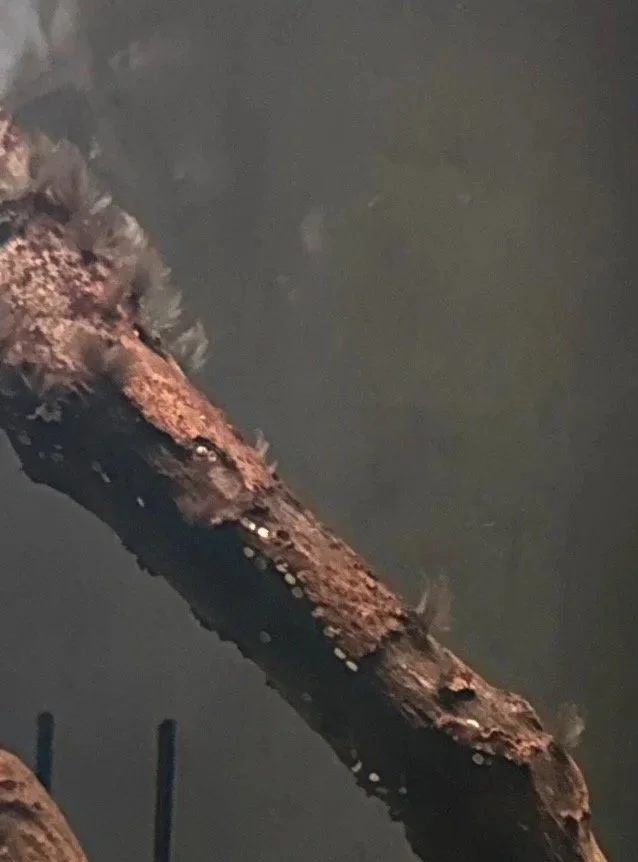
Black Beard Algae on a piece of driftwood
What Caused It
My tank is long — long enough that I need two Fluval Plant 3.0 lights to cover it. Those two lights were overlapping in the middle of the tank, so that section was getting noticeably more light than the rest. On top of that, the lights were sitting directly on the glass instead of raised above it, which made the intensity in that overlap zone even worse.
But the light wasn't the whole story. My tank is low-tech — no CO2 injection — and I wasn't dosing Excel and Flourish consistently. Some weeks I'd dose on schedule, other weeks I'd forget or dose late. That inconsistency mattered just as much as the light did, because it left gaps for BBA to move into.
That's really the pattern with BBA. It doesn't show up because your tank is dirty or because you're doing something drastically wrong — it shows up because something is inconsistent. For me, it was two things at once: too much light in one spot, and carbon dosing that wasn't steady enough to keep up with it.
It's also worth saying: BBA doesn't show up overnight. It's not going to take over your tank while you're not looking. It grows slowly and gradually establishes itself, which is part of why it sneaks up on people. By the time you notice it, it's had weeks to settle in.
The Environment BBA Actually Likes
Once I understood what caused mine, it made a lot more sense why BBA shows up where it does. It isn't random — it's opportunistic, and it's specifically drawn to instability. A few conditions it especially likes:
Fluctuating or inconsistent carbon/CO2 levels. This is a big one in low-tech tanks like mine, where liquid carbon (Excel) is doing the work CO2 injection would otherwise do. If dosing isn't steady, carbon availability swings up and down, and BBA takes advantage of the low points.
Light that outpaces available nutrients or carbon. Plants can only use light if they have enough carbon and nutrients to match it. When light is high (or concentrated, like in my overlap zone) but carbon dosing is inconsistent, that mismatch is exactly the kind of opening BBA thrives in.
Poor or uneven flow. Dead spots where water barely moves tend to be where BBA shows up first — often right on filter outlets, intake tubes, and other high-turbulence points, which is a little counterintuitive but is really about organic buildup in those areas.
Organic waste buildup. Decaying plant matter, uneaten food, and general mulm buildup between water changes give it more to feed on.
Notice that none of these are about the tank being "dirty" in a general sense — they're all forms of inconsistency. That's really the throughline with BBA.
What I Actually Did
1. Fixed the Light First
This was the priority, before I touched anything else. I raised both lights up off the glass, and repositioned them so no part of the tank was getting hit by both lights at once. One light per section, no overlap.
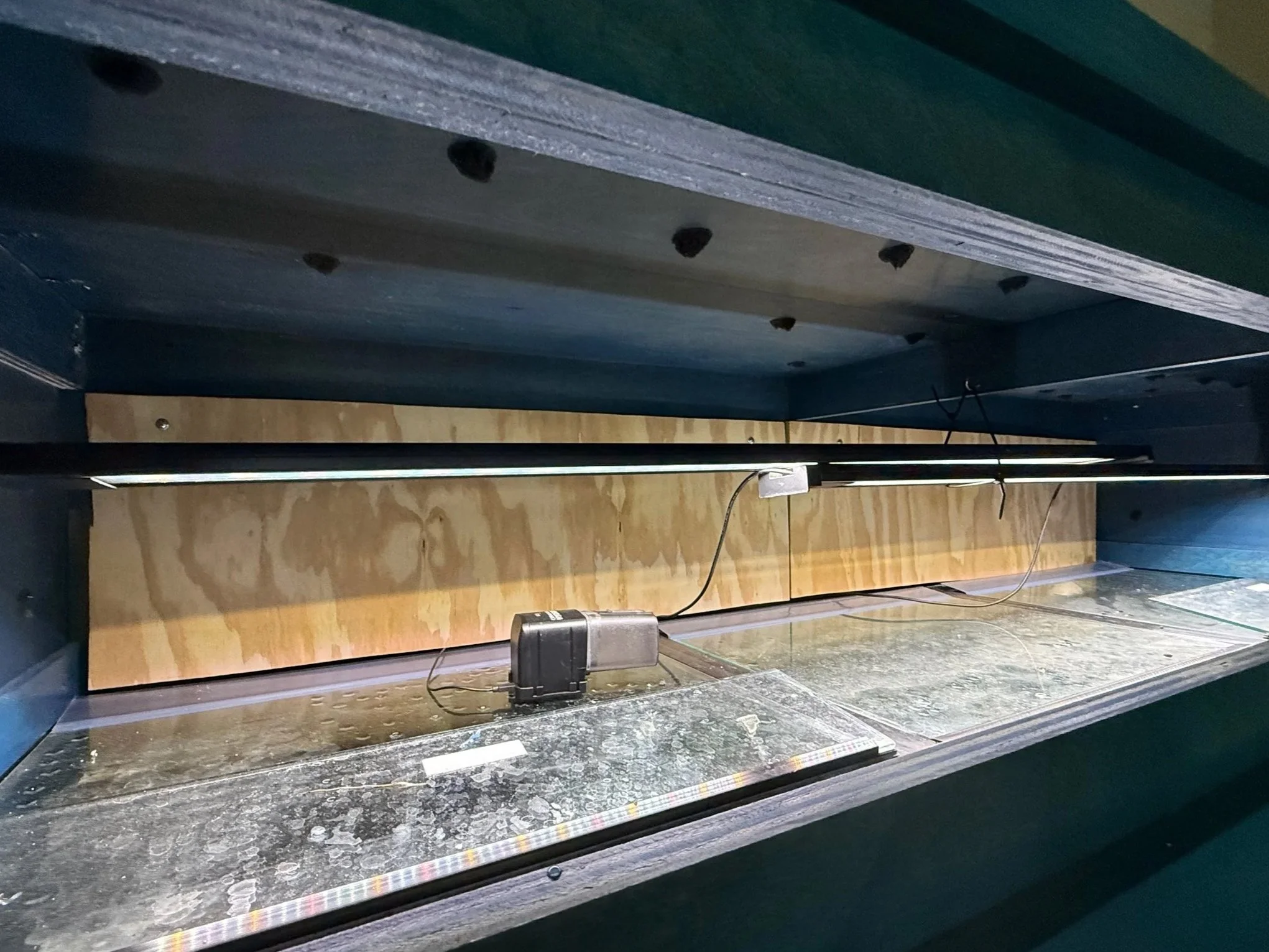
Lights now overlap each other so only one light providing light in any one spot on the tank. Lights are also raised up over the tank by about 8 inches.
This addressed one half of the cause. Everything after this was about closing the other gap and cleaning up what was already there.
2. Started Dosing Excel and Flourish Consistently — With an Actual Doser
Instead of dosing whenever I remembered, I put myself on an actual schedule and stuck to it. Eventually I went a step further and added an automatic doser just for Excel. In a low-tech tank like mine, Excel is doing the work CO2 injection would otherwise do, which makes it the most important nutrient for the plants — and it's also the one directly keeping BBA at bay. That's not something I wanted to leave up to whether I remembered to grab the bottle that day. Once the dosing stopped being sporadic, that instability BBA had been taking advantage of went away too.
3. Increased Water Changes to Every Two Weeks
I bumped my water change frequency up to every two weeks instead of my normal schedule. This wasn't a special "algae treatment" routine — it was just more frequent maintenance, which naturally means more frequent opportunities to address the algae directly.
4. Dosed Excel Directly on the BBA During Water Changes
Here's the part that did the real work: every time I had the pump off for a water change, I'd dose Flourish Excel directly onto the BBA with a pipette. Pump off means the Excel stays put on the algae instead of getting diluted and pushed around the tank, and since I was already in there doing maintenance, it didn't require any extra time or a separate "treatment day."
How Fast It Worked
After 2 water changes — the BBA was mostly gone.
After 3 water changes — it was completely gone.
It hasn't come back since.
No teardown, no scrubbing driftwood outside the tank, no week of stress for my fish and plants. Just fixing the light, staying consistent with maintenance, and using the Excel dosing I was already doing to my advantage.
Why This Worked Without the Full Removal Routine
The standard "remove everything" advice exists because it does speed up killing the algae you can already see. But it treats the symptom, not the cause — and it comes with real downsides: stressed fish, disturbed plants, and a lot of extra effort for something that will just come back if the underlying issue isn't fixed.
Fixing my light setup and getting consistent with Excel and Flourish addressed the actual reasons BBA was growing in the first place. Once both of those were handled, regular maintenance and direct Excel dosing during water changes — something I was already doing anyway — was more than enough to finish the job. I didn't need to fight the algae on top of fixing the cause. Fixing the cause did most of the work for me.
The Short Version
Figure out what's inconsistent in your tank — for most people, it's some combination of light and carbon/CO2 dosing. Fix that first. If you're running a low-tech tank like mine, that especially means getting Excel and Flourish on a real schedule — an automatic doser for Excel takes the "did I remember" problem out of it entirely. Then use your existing maintenance routine (water changes, pump off, direct spot dosing) to clean up what's left. You don't need to tear your tank apart to beat BBA.