
How to Choose the Right Type of Aquarium for You: Freshwater vs. Saltwater for Beginners
Setting up your first aquarium is exciting — but it can also feel overwhelming.
Should you start with a freshwater tank or go straight for saltwater?
How big should your tank be? What equipment do you really need?
Don’t worry — you’re in the right place.
In this guide, I’ll help you decide which aquarium type best fits your goals, lifestyle, and budget.
Whether you dream of a lush planted tank or a colorful coral reef, this article will help you start with confidence.
Before You Buy: Planning for Cost and Equipment
Both freshwater and saltwater aquariums can be incredibly rewarding, but they differ in setup and complexity.
Freshwater tanks are generally simpler and more budget-friendly.
Saltwater tanks, especially those plumbed with a sump, tend to cost a bit more because they require extra components such as a protein skimmer, return pump, and plumbing lines to manage water flow and filtration.
When planning your setup, remember to account for everything that adds weight and cost beyond the glass box itself:
Water weight: 8.3 lbs per gallon — plus the tank, stand, rock, sand or gravel, lighting, and accessories.
Filtration system: If you’re using a sump or large canister filter, be sure your stand can safely support it.
Ongoing maintenance: Stock up on essentials like test kits, water conditioners, and replacement filter media.
We’ll take a closer look at filtration systems, sump setups, and other key equipment in an upcoming article — stay tuned!
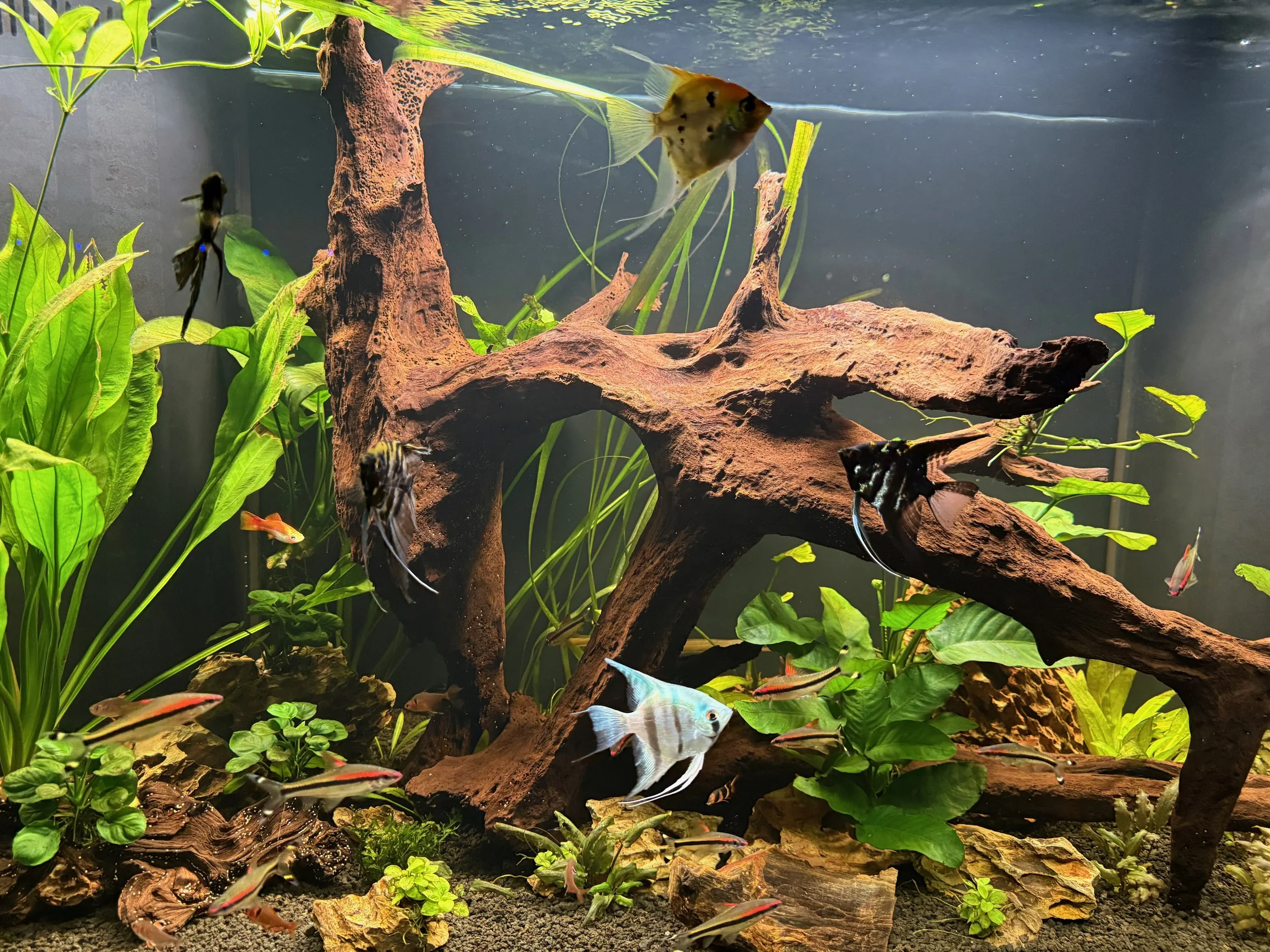
210G Freshwater Planted Tank
Step 1: Decide What Kind of Aquarium You Want
Freshwater vs. Saltwater — What’s the Difference?
| Feature | Freshwater Tank | Saltwater Tank |
|---|---|---|
| 💰 Cost | Lower overall cost, simpler gear | Higher cost if plumbed for sump, protein skimmer, and extra equipment |
| ⚙️ Maintenance | Easier, more forgiving | Requires stable salinity and water chemistry |
| 🌿 Look & Feel | Calm, natural, planted | Vibrant, colorful, reef |
Want to start with a planted freshwater tank?
Read my step-by-step guide here.
Curious how a reef system comes together?
See my saltwater reef build story.
Considering Coral?
If you plan to keep coral in your saltwater tank, that adds another layer of beauty — and complexity.
Corals are living organisms that depend on stable lighting, water chemistry, and nutrient levels.
Adding coral means you’ll need to:
Maintain consistent calcium, alkalinity, and magnesium levels.
Invest in stronger lighting designed for coral growth.
Be more precise with water flow and filtration.
Coral tanks are some of the most visually stunning aquariums you can create, but they require more testing, dosing, and attention to detail than a fish-only system.
If you’re just starting out, consider beginning with a fish-only saltwater setup, then add coral later once you’re comfortable managing water chemistry.
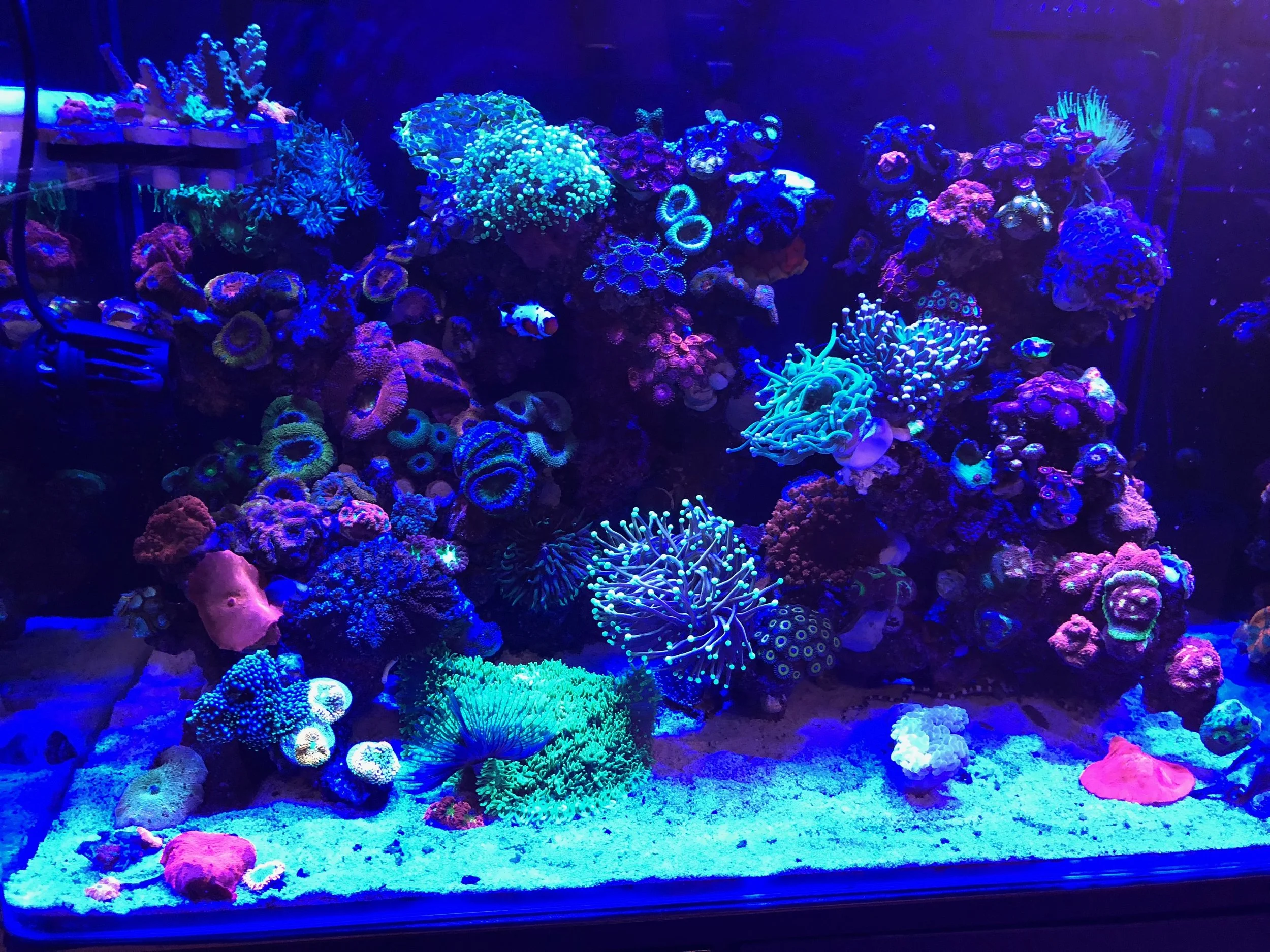
Saltwater Tank with mostly soft corals
Step 2: Pick the Right Size for Your Space and Budget
Start with a tank size you can comfortably maintain — not just what looks impressive.
10–20 gallons: Great starter range for freshwater aquariums.
40–75 gallons: Excellent balance of space, stability, and flexibility for saltwater or larger communities.
Saltwater tanks are actually easier when they’re bigger. More water volume creates a more stable environmentand gives you room for small mistakes without drastic swings in chemistry.
Pro Tip:
Plan your location carefully before buying. Water weighs about 8.3 pounds per gallon, plus the tank, substrate, rock, lighting, and equipment.
If you use a sump filter, include that extra weight on the same stand.
A 75-gallon tank with a 20-gallon sump can easily top 900–1,000 pounds once full and running.
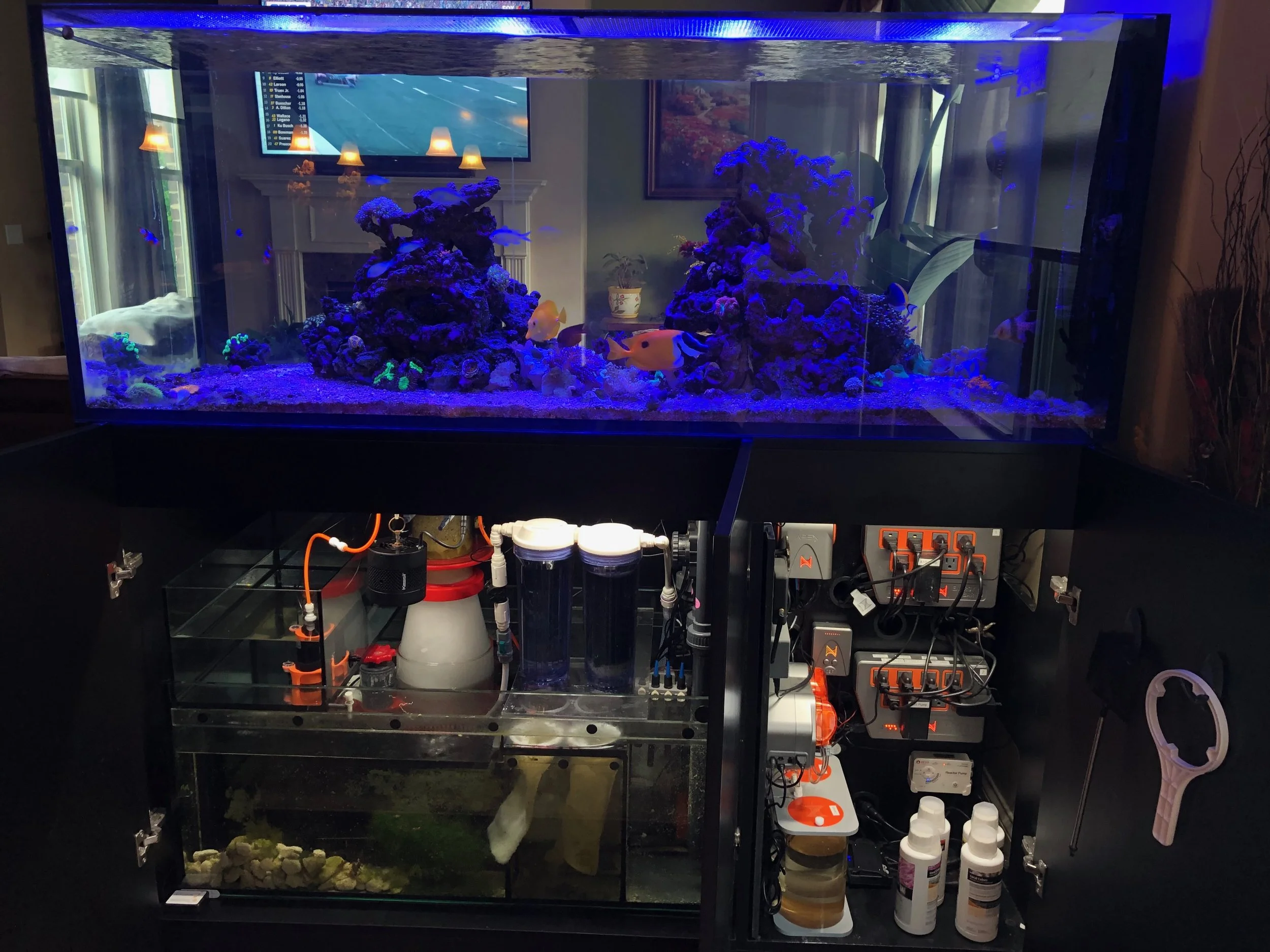
Complete Saltwater Tank with Sump, Neptune APEX and Dosing, with Protein Skimmer and Refugium
Step 3: Learn What Equipment You’ll Need
Every aquarium relies on the same basic components:
🪞 Tank & Stand – Choose high-quality glass or acrylic; make sure your stand is rated for the full load.
🌊 Filter – The heart of your system, keeping water clean and clear.
🌡️ Heater – Maintains stable temperature.
💡 Lighting – Critical for plants or coral.
🪨 Substrate & Rock – Gravel or sand for freshwater; live rock for saltwater.
🧪 Water Test Kit – Track ammonia, nitrite, nitrate, and pH.
⚙️ Optional Add-Ons: Auto top-off, dosing pump, or air pump.
Step 4: Plan Your Fish, Plants, and Corals Before You Buy
Choosing what lives in your tank isn’t an afterthought — it shapes everything about your setup: the equipment, lighting, filtration, and even the tank size.
Freshwater Tanks
Think in communities. Decide early whether you want a peaceful community tank (guppies, tetras, corydoras, shrimp) or a species-specific tank (bettas, cichlids, goldfish).
Plan your plant style.
Low-tech tanks use hardy plants such as Anubias, Java fern, and Amazon swords that don’t need added CO₂ or intense lighting — perfect for beginners.
High-tech tanks may include carpeting or red plants that require a CO₂ system, nutrient dosing, and stronger lights for lush growth.
Match species to conditions. Some fish prefer soft, acidic water while others thrive in hard, alkaline water. Always check compatibility and adult size before buying.
Saltwater Tanks
Plan your livestock around stability. Saltwater fish are more sensitive to changes, so avoid overstocking and add new fish slowly.
Corals add beauty — and complexity. They need strong lighting, consistent calcium and alkalinity, and good flow.
Soft corals (beginner-friendly): Zoanthids, mushrooms, leathers.
LPS corals (intermediate): Hammer, torch, and frogspawn.
SPS corals (advanced): Acropora, Montipora — stunning but demanding.
Invertebrates and cleanup crew. Snails, hermit crabs, and shrimp help manage algae and waste, but each still adds to your bio-load and needs stable parameters.
Why This Step Is So Critical
Every fish, plant, and coral has specific needs. Planning your stock first ensures:
Your equipment supports their requirements (lighting, filtration, flow, and temperature).
You avoid incompatibilities that lead to aggression or losses.
Your tank cycles and matures properly before introducing delicate species.
Pro Tip: Pick one “centerpiece” species or coral type you love — then build the rest of your tank around creating the perfect home for it.
Step 5: Maintain for Success
Consistency is key to a healthy tank.
Test water weekly
Do a 10–20% water change (15% is ideal for most setups)
Clean filter media monthly
Feed lightly — only what fish can eat in 1–2 minutes
For saltwater aquariums, remember you’ll need pre-mixed saltwater or your own mixing station with purified RO/DI water and marine salt mix.
Keep enough water on hand to complete each 15% change — for example, a 75-gallon tank will need around 11 gallons of ready saltwater for each change.
“Stable parameters grow healthy tanks. Chasing numbers causes stress — for you and your fish.”
Step 6: Start Your Aquarium Journey
Now that you know the basics, you’re ready to create your own underwater world!
Start with my freshwater planted tank guide.
See my saltwater reef tank build and setup process.
And don’t miss upcoming guides on filtration systems, sump setups, and choosing the right heater and lighting — coming soon!