
Water Testing for Beginners: Understanding pH, Ammonia, Nitrite, Nitrate, KH, GH, and TDS in a Freshwater Planted Aquarium
An educational guide by The Tank Lady™
Introduction: Why Water Testing Matters
Crystal-clear water isn’t always healthy water. In a freshwater planted aquarium, stable water chemistry is essential for healthy fish, plants, and bacteria.
Regular testing helps you detect early shifts before problems appear.
The Tank Lady™ recommends testing weekly and tracking results. Start with the basics:
pH
Ammonia
Nitrite
Nitrate
To understand why those numbers change, also test KH, GH, and TDS — these determine how stable your pH will be and how your water’s mineral balance supports life.
[Insert photo: API test kit and TDS meter on counter — alt text: freshwater aquarium water testing with API kit and TDS meter]
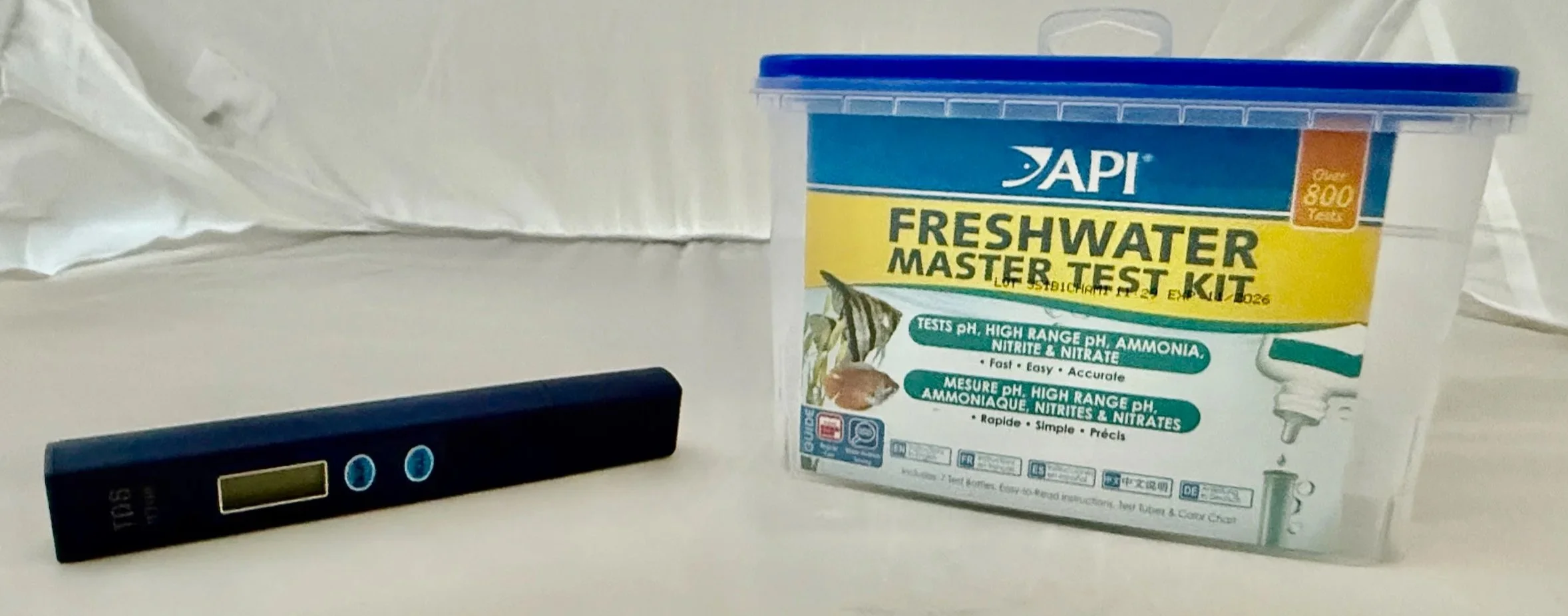
Freshwater aquarium water testing with API kit and TDS meter
Step 1: Choose Reliable Test Kits
Accuracy is key. While strips are convenient, liquid or digital testing is far more precise.
The Tank Lady™ recommends:
API Freshwater Master Test Kit — for pH, ammonia, nitrite, nitrate
API KH/GH Test Kit — for hardness
TDS meter — for total dissolved solids and quick water quality checks
Why these work well:
Reliable and cost-effective
Easy to read for beginners
Give you a complete water chemistry picture
TDS offers quick confirmation that your KH, GH, and minerals are stable
Pro Tip: Log your weekly readings. Consistent records show trends that one-time tests miss.
Step 2: Best Practices for Accurate Testing
Rinse test tubes with tank water before use.
Fill to the line—precision matters.
Shake reagents fully per instructions.
Check colors under daylight, not LEDs.
Test before feeding or water changes.
Store chemicals away from heat and sunlight.
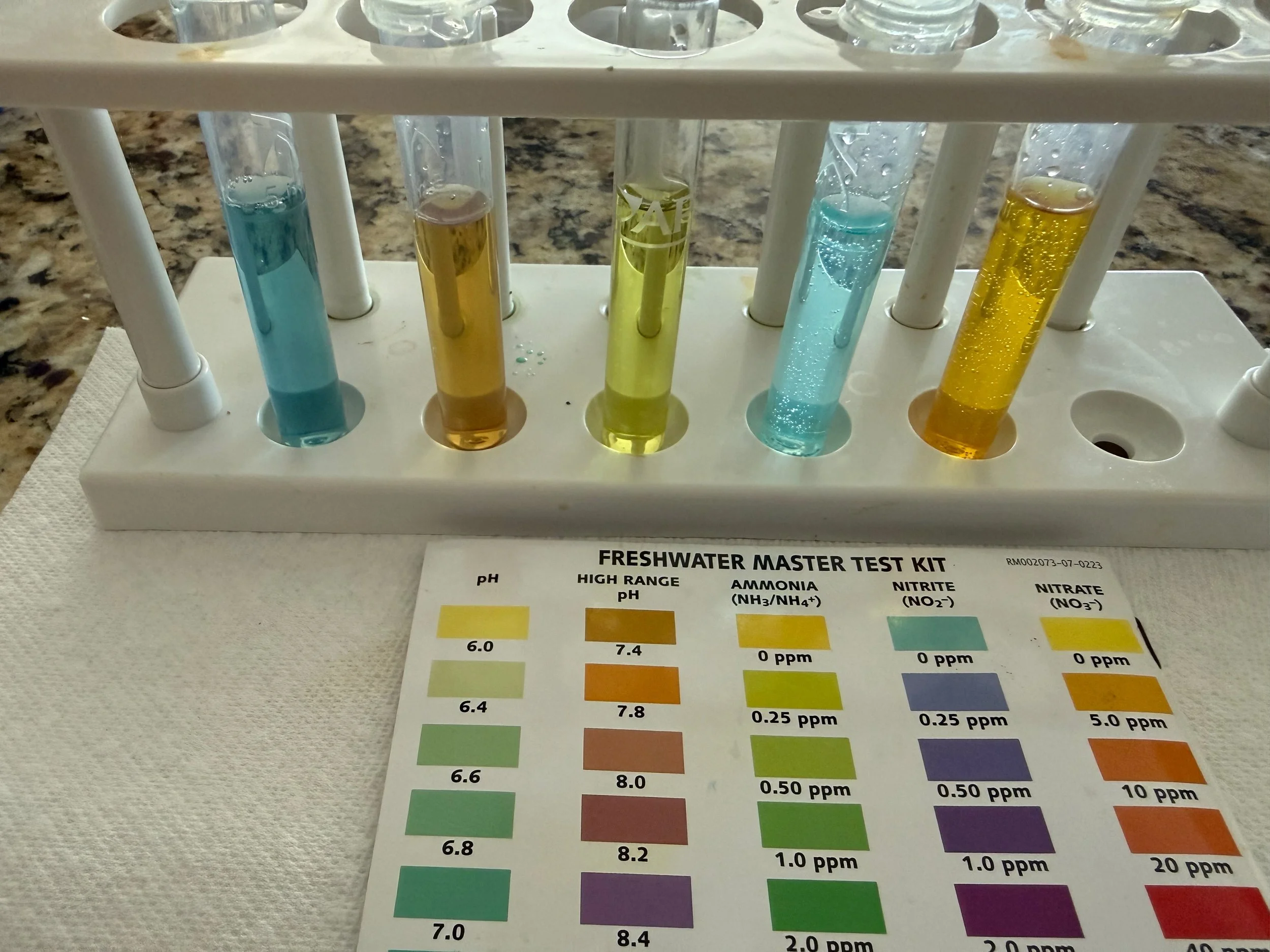
Aquarium Test Results
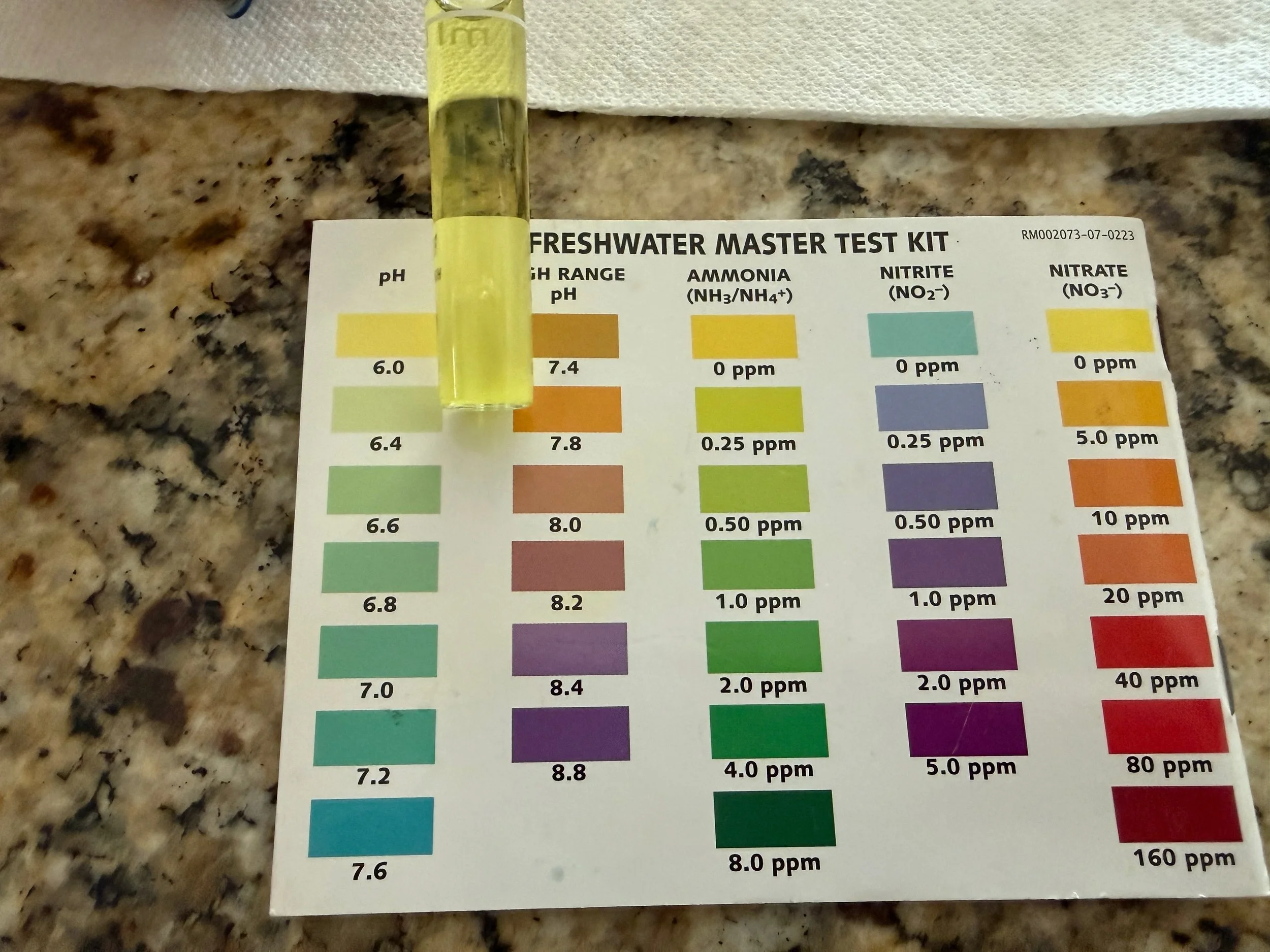
Lighting is critical - Here Ammonia looks to be 0
Step 3: Understanding Each Parameter
pH (Ideal Range: 6.5–7.5)
pH shows whether water is acidic or alkaline. For most planted tanks, 6.5–7.5 keeps plants happy and fish comfortable.
If pH is too high (>7.8):
Perform a 25–30% water change.
When preparing new water, adjust pH to 6.5–7.0 using Seachem Acid and Alkaline Buffer.
Repeat weekly until the tank stabilizes.
Consider peat moss in the sump or filter for natural buffering.
If pH is too low (<6.2):
Mix new water around 7.5 before adding.
Check KH—low KH causes unstable, falling pH.
The Tank Lady™ uses RODI water (starting near 0 pH and 0 hardness) and adjusts it before each water change. Tap water users should test and condition new water before adding.
Understanding KH and GH: The Keys to pH Stability
KH (Carbonate Hardness)
KH measures your water’s buffering ability — its resistance to pH swings.
Too low and pH will fluctuate; too high and it’s harder to adjust.
Ideal KH for most planted tanks: 3–6 dKH (50–100 ppm).
If KH is low (<3 dKH):
Add Seachem Alkaline Buffer or place crushed coral in your sump to raise it slowly.
Regular water changes with buffered water maintain balance.
GH (General Hardness)
GH tracks calcium and magnesium levels—important for fish health and plant growth.
Ideal GH for most community tanks: 4–8 dGH (70–140 ppm).
If GH is low:
Add minerals using Seachem Equilibrium during water changes. This product replenishes essential minerals such as calcium, magnesium, and potassium — all vital for plant growth and fish health.
Why adding Equilibrium to new water helps:
When using RODI or very soft tap water, most beneficial minerals are stripped away. Mixing in Equilibrium before each water change restores these nutrients and raises GH naturally, which in turn helps stabilize pH and strengthen the buffering relationship with KH. Balanced GH not only promotes healthy plant growth and vibrant coloration, but also prevents sudden parameter swings by keeping new water consistent with your tank’s established chemistry.
Why regular water changes help overall:
Over time, KH and GH are gradually depleted as plants, fish, and bacteria use minerals. Routine water changes, especially with properly remineralized water, restore buffering capacity, maintain mineral balance, and keep pH steady— the cornerstone of long-term tank stability.
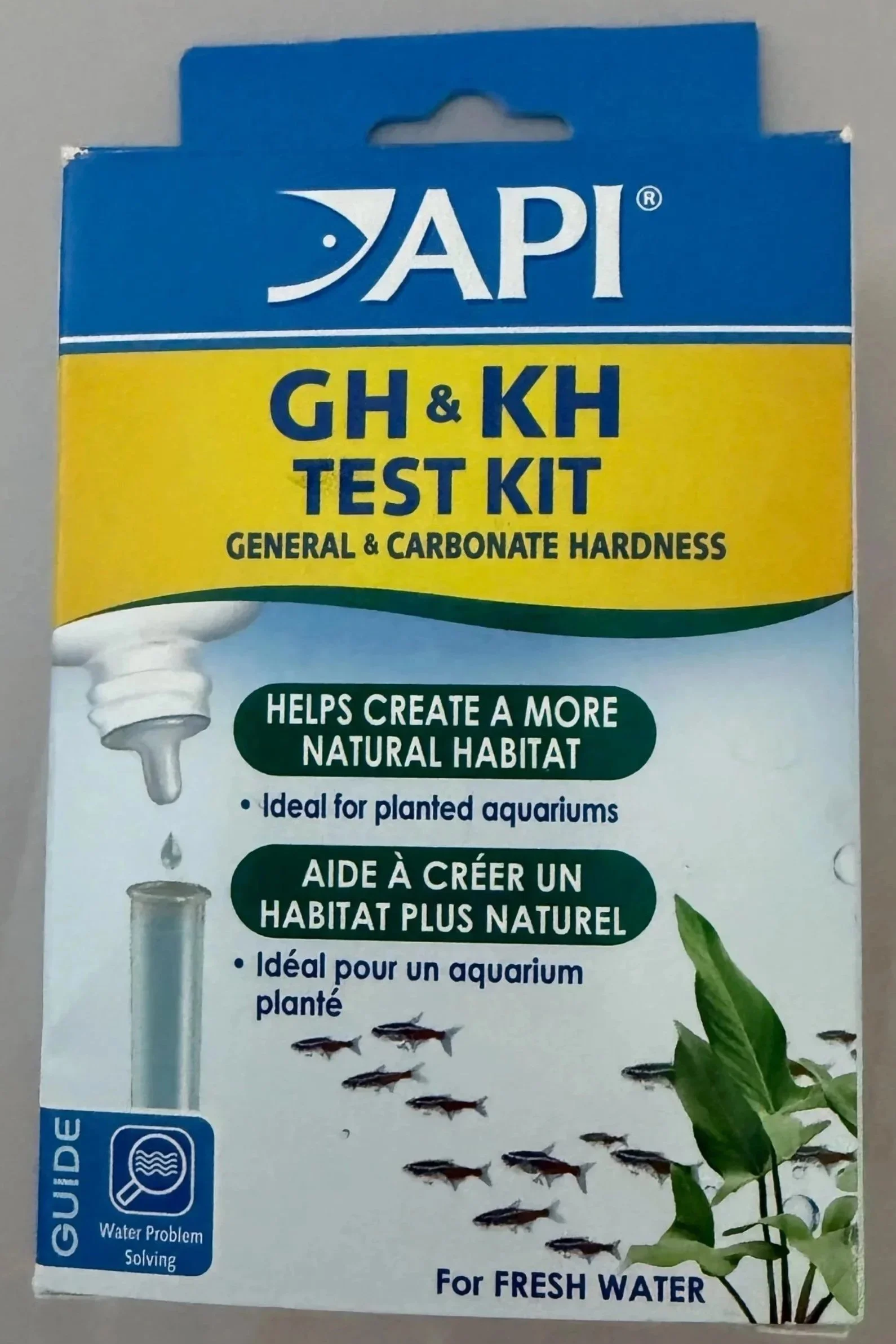
API GH & KH Test Kit
TDS (Total Dissolved Solids)
What TDS Measures:
TDS represents the total concentration of dissolved minerals and salts in your water, including carbonates, calcium, magnesium, and trace elements.
Why It Matters:
TDS reflects overall mineral content—a combination of KH + GH + nutrients.
Stable TDS means your buffering and hardness are steady, which supports stable pH.
Sudden jumps in TDS indicate imbalance, over-fertilization, or rising nitrate levels.
Ideal Range:
100–300 ppm for most planted freshwater aquariums.
Tanks using RODI water may read lower (especially before remineralization).
If TDS drifts upward:
Perform a water change to dilute excess minerals or waste.
Check nitrate levels; high TDS often parallels rising nitrate.
If TDS is very low (<80 ppm):
Add minerals (Equilibrium or buffer products) to restore GH/KH and support plant growth.
[Insert photo: digital TDS meter showing reading near aquarium — alt text: checking total dissolved solids in freshwater aquarium]
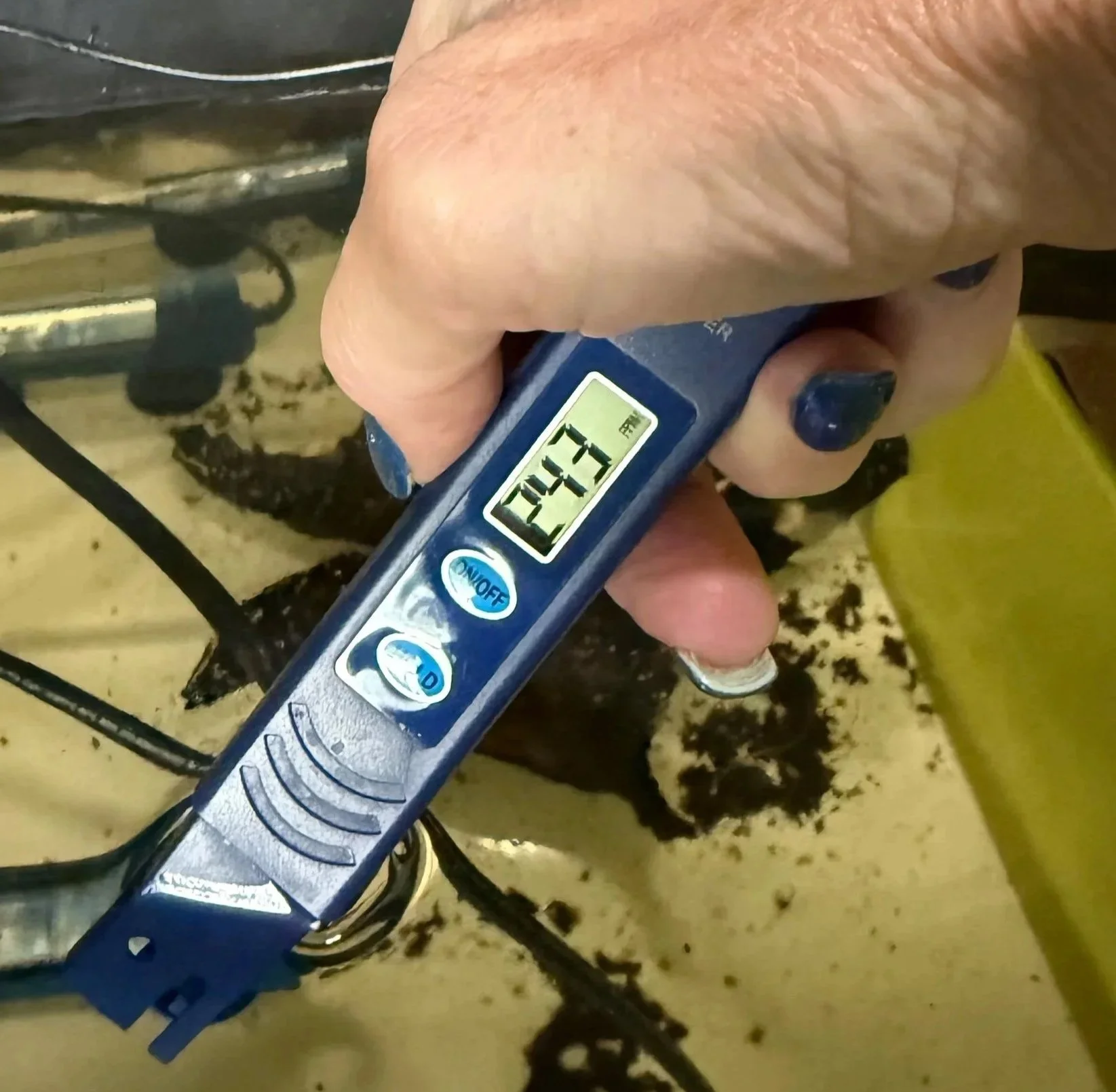
Checking Total Dissolved Solids (TDS) in Sump of Freshwater Planted Aquarium
Ammonia (Ideal: 0 ppm)
Ammonia is one of the most toxic compounds in an aquarium and should always remain at 0 ppm. Even trace amounts can stress fish, damage gills, and stall beneficial bacteria, so early detection and calm correction are key.
If ammonia is detectable (0.1–0.25 ppm):
Add Seachem Stability to reinforce beneficial bacteria.
Pause feeding for 24 hours to reduce new waste.
Re-test after 24 hours before taking further action.
If ammonia is higher (>0.25 ppm):
Perform an immediate 30–50% water change.
Add Seachem Prime to temporarily detoxify ammonia while the bacterial cycle stabilizes.
Continue dosing Stability daily until readings return to 0 ppm.
Re-test daily for accuracy.
Why I Don’t Add Prime Right Away
Many aquarists reach for Seachem Prime the moment they see any ammonia — and in many cases, that’s perfectly fine. Prime converts toxic ammonia (NH₃) into a safer, non-toxic form (NH₄⁺) for 24–48 hours, protecting fish and buying time to fix the root cause.
However, The Tank Lady™ takes a slightly different approach for very low readings (≤0.25 ppm) when fish show no distress:
Prime doesn’t remove ammonia — it only binds it temporarily, and levels reappear once the effect wears off.
It can confuse test results, since most liquid kits (like the API Master Kit) can’t tell the difference between ammonia and ammonium.
Waiting helps confirm your biological filter is working. By letting bacteria process small amounts naturally, you can see whether the tank’s cycle is keeping up.
For low-level detections, letting bacteria handle the load often leads to better long-term stability. If levels rise or fish show signs of stress, adding Prime and doing a water change is the right next step.
Ammonia Best Practice Summary
| Situation | Action | Why |
|---|---|---|
| Ammonia ≤0.25 ppm, no fish distress | Wait and re-test; add Stability if cycling | Lets bacteria process ammonia naturally |
| Ammonia 0.25–0.5 ppm, fish present | Partial water change, then add Prime | Detoxifies while physically reducing waste |
| Ammonia >0.5 ppm | Large water change + Prime immediately | Emergency measure to protect fish |
| After dosing Prime | Re-test after 24–48 hours | Readings may rise again as Prime wears off |
Nitrite (Ideal: 0 ppm)
Nitrite, like ammonia, is toxic even in small amounts and should always remain at 0 ppm. Elevated nitrite prevents fish from absorbing oxygen properly, causing stress and sometimes “brown blood disease.” Detecting nitrite early and responding calmly is key to protecting your fish and keeping your biological filter healthy.
If nitrite is detectable (0.1–0.25 ppm):
Add Seachem Stability to reinforce your biological filter.
Pause or reduce feeding for 24 hours to limit waste.
Re-test in 24 hours to confirm the level is dropping.
If nitrite is higher (>0.25 ppm):
Perform a 25–40% water change right away to dilute it.
Add Seachem Prime to temporarily detoxify nitrite for up to 48 hours while beneficial bacteria recover.
Continue adding Stability daily until readings reach 0 ppm.
Check that your filter media and sponges aren’t clogged—good flow and oxygen are critical for nitrifying bacteria.
If nitrite remains above 1 ppm after 48 hours:
Perform a larger 40–50% water change.
Check for underlying causes such as overfeeding, recent filter cleaning, or a loss of bio-media.
Add additional aeration using an air stone or increase surface agitation to offset the reduced oxygen levels caused by nitrite toxicity.
Tip: Once both ammonia and nitrite consistently test at 0 ppm for a full week, your tank’s biological filter is fully cycled and stable. Continue weekly testing to ensure your aquarium remains balanced and thriving.
Nitrate (Ideal: 5–20 ppm)
Nitrate is the end of the nitrogen cycle — too much leads to algae or fish stress.
If nitrate exceeds 40 ppm:
Do a large water change (40–50%).
Reduce feeding, clean filters, and encourage more plant growth.
Step 4: Build a Consistent Routine
Weekly:
Test pH, ammonia, nitrite, nitrate.
Note TDS readings (they often shift before parameters do).
Monthly:
Test KH and GH or any time pH drifts.
Acceptable Water Parameter Summary
| Parameter | Ideal Range | What to Do if Out of Range |
|---|---|---|
| pH | 6.5–7.5 | Adjust new water pH before water changes; ensure KH stability. |
| KH | 3–6 dKH | Add buffer or crushed coral; water changes maintain buffering. |
| GH | 4–8 dGH | Add minerals like Seachem Equilibrium to remineralize RODI or soft water. |
| TDS | 100–300 ppm | Low: remineralize; High: water change or reduce feeding. |
| Ammonia | 0 ppm | Add Stability or Prime; perform water change if > 0.2 ppm. |
| Nitrite | 0 ppm | Add Stability + Prime; partial water change 25–40%; add aeration if > 1 ppm. |
| Nitrate | 5–20 ppm | Increase water changes; reduce feeding; encourage plant uptake. |
The Tank Lady™ Tip
Think of KH, GH, and TDS as your tank’s foundation—they govern how stable your pH remains. Regular water changes don’t just “clean” the tank; they replenish minerals, reset buffers, and restore balance. Stable parameters mean healthy fish, vibrant plants, and fewer surprises.
About The Tank Lady™
The Tank Lady™ helps aquarium enthusiasts create beautiful, thriving tanks with practical, real-world guidance. Follow along for more tips on freshwater, saltwater, and planted aquarium success.