
Our Red Sea Reefer Peninsula 650 Build
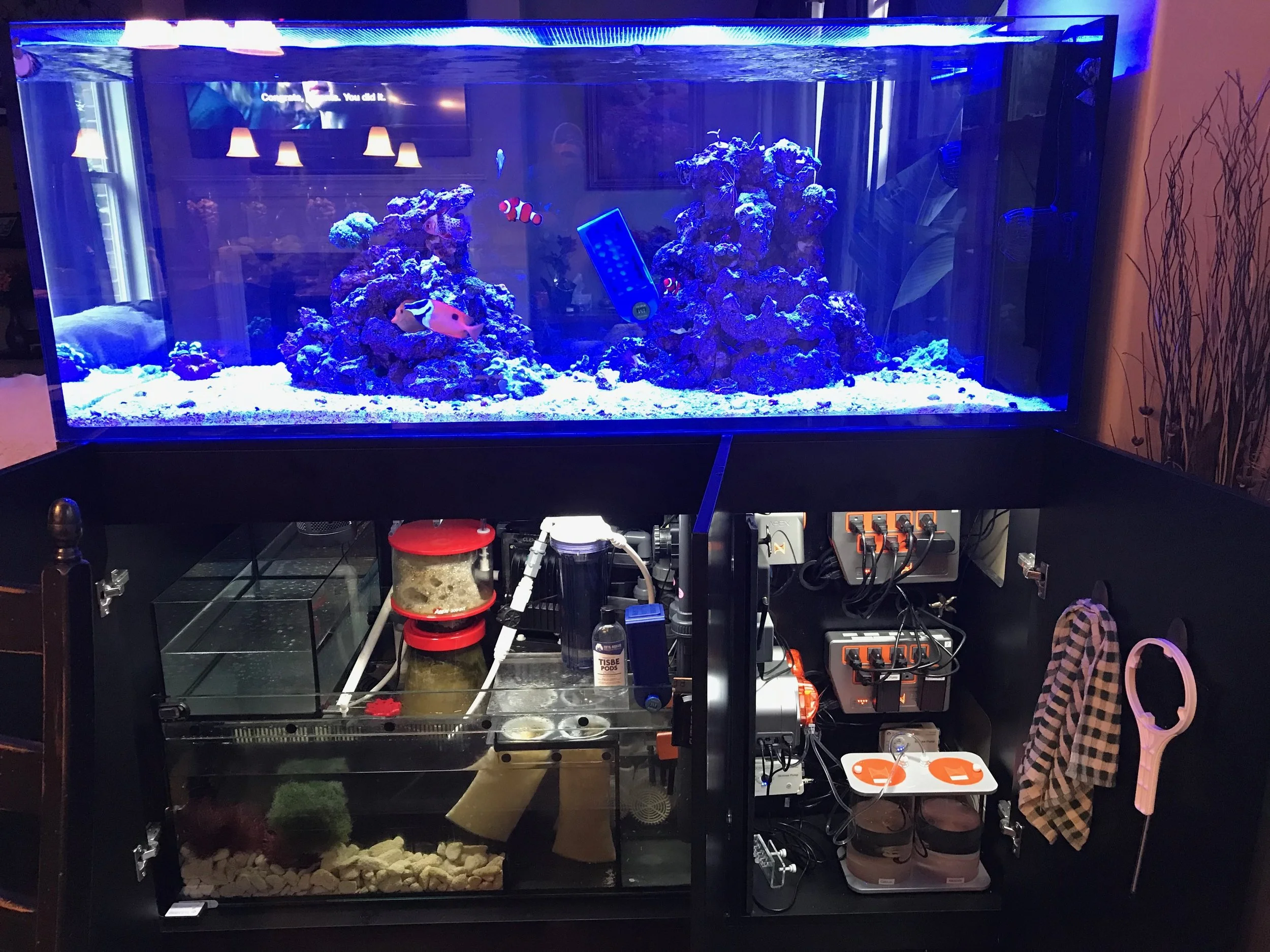
After years running a 90-gallon mixed reef, we decided to take everything we’d learned — including a tough ich outbreak — and start fresh with a Red Sea Reefer Peninsula 650 Deluxe. This is a summary of that journey in 2018.
The Setup
We wanted a clean, quiet, low-maintenance system that still delivered great performance. Key gear included:
Varios 6 return pump & Reef Octopus Regal 200 skimmer
Neptune Apex 2016 with WAVs, DOS, ATK, and flow monitoring
AI Hydra 26 lights (David Saxby schedule, lowered intensity)
Kessil H380 refugium light
Brightwell & MarinePure media, later switched fully to Brightwell
Clearwater Algae Scrubber with a Varios 2 pump
The aquascape used CaribSea Life Rock and aragonite sand for a natural look and easy maintenance.
Cycle & Livestock
We cycled with Bio-Spira and Dr. Tim’s ammonia, fully cycled in about two weeks. The survivors from our 90 G — two clowns, two chromis, a PJ cardinal, yellow tang, and foxface — moved in gradually after quarantine. Corals and invertebrates followed once parameters stabilized.
Lessons Learned
We’ve had our share of reefing lessons:
Replaced MarinePure after aluminum traces appeared in ICP tests.
Found copper contamination from a salt-mixing pump cable.
Recovered from a calcium overdose caused by an Apex slider bump.
Survived an Apex failure, temporarily switching to Maxspect Gyres and manual dosing — a good reminder not to rely on a single system.
Despite it all, the tank is thriving. Corals are growing, the anemone split, and water parameters hold steady (Mg 1360, Ca 470, Alk 8.4).
Final Thoughts
The Red Sea Reefer 650 has been a dream upgrade — stable, quiet, and easy to maintain. Taking it slow, quarantining fish, and focusing on balance made all the difference.
For the complete photo-rich build log, visit: